

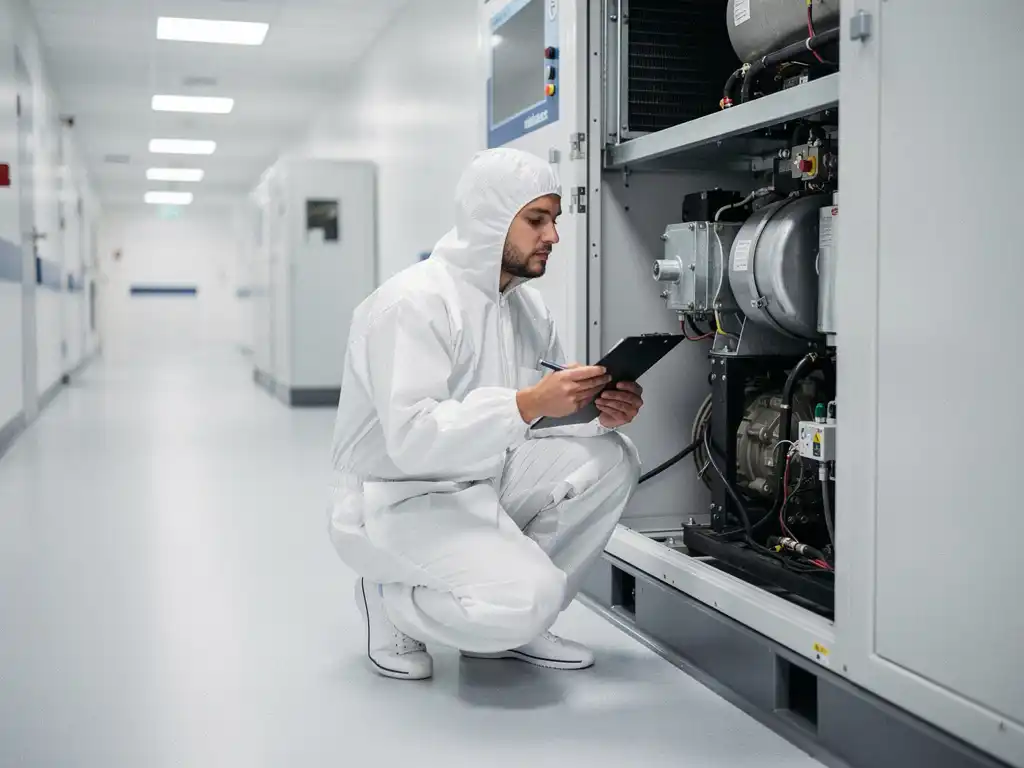
A lifecycle analysis (LCA) for facility equipment is a structured evaluation of all costs, environmental impacts, and performance factors associated with a piece of equipment from the moment it is acquired to the point it is decommissioned or replaced. For facility managers operating in regulated industries, it is the most reliable method for understanding the true value of equipment decisions over time, not just at the point of purchase. The sections below address the most common questions facility managers ask when approaching lifecycle cost analysis for the first time.
What costs does a lifecycle analysis actually measure?
A lifecycle analysis measures every cost associated with facility equipment across its entire operational life, including acquisition, installation, maintenance, energy consumption, compliance, and end-of-life disposal. The goal is to capture the full financial picture rather than relying on purchase price alone as a proxy for value.
In practice, a thorough lifecycle cost analysis for facility equipment typically accounts for the following categories:
- Capital costs: Purchase price, delivery, and installation
- Operational costs: Energy use, consumables, and labour required to operate the equipment
- Maintenance costs: Scheduled servicing, unplanned repairs, and replacement parts
- Compliance costs: Validation, documentation, and audit preparation in regulated environments
- Downtime costs: Lost productivity or production during equipment failure or replacement cycles
- Disposal costs: Decommissioning, waste removal, and any regulatory obligations at end of life
For facilities operating in cleanroom or contamination-sensitive environments, compliance and downtime costs are often the most significant and the most frequently underestimated. A contamination event traced back to inadequate equipment can trigger a full audit response, batch rejection, or regulatory action, none of which appear in a simple upfront cost comparison.
How does lifecycle analysis differ from upfront cost comparison?
An upfront cost comparison looks only at the purchase price of equipment options, while a lifecycle analysis accounts for every cost incurred over the equipment’s full operational lifespan. The difference is significant: equipment with a lower purchase price frequently carries a higher total cost of ownership when maintenance, consumables, and replacement frequency are factored in.
Consider two contamination control solutions as an example. Disposable sticky mats may appear inexpensive per unit, but their ongoing consumption, frequent replacement, and waste disposal costs accumulate rapidly over months and years. A reusable polymeric mat system with a three-to-five-year lifespan requires a higher initial investment but delivers a substantially lower cost per use across its operational life, while also reducing the administrative burden of constant reordering.
Upfront cost comparisons also fail to capture risk-related costs. In pharmaceutical manufacturing, food production, or aerospace assembly, the financial consequence of a contamination event can far exceed the cost of the equipment intended to prevent it. Lifecycle analysis forces decision-makers to weigh those risks explicitly, making it a more defensible basis for procurement decisions in regulated environments.
What equipment categories benefit most from lifecycle analysis?
Equipment categories with high replacement frequency, significant maintenance requirements, or direct links to regulatory compliance benefit most from lifecycle cost analysis. These are the categories where the gap between upfront cost and total cost of ownership tends to be largest and most consequential.
In facility management, the equipment categories that most consistently reward lifecycle analysis include:
- Contamination control systems: Mats, filtration units, and gowning room equipment where replacement frequency and contamination risk directly affect compliance outcomes
- HVAC and air handling units: High energy consumption and maintenance demands make these among the most complex lifecycle cost calculations in any facility
- Cleanroom furniture and fixtures: Items subject to repeated cleaning and decontamination cycles that affect material integrity over time
- Material handling equipment: Forklifts, pallet trucks, and carts operating in controlled zones, where contamination transfer between zones is a documented risk
- Monitoring and validation equipment: Instruments requiring periodic calibration, certification, and software updates that add recurring cost beyond the purchase price
For contamination control specifically, equipment lifecycle management is not simply a financial exercise. The performance of contamination control equipment degrades if it is not replaced or maintained on schedule, and that degradation has direct implications for audit readiness and product quality.
How do you conduct a lifecycle analysis for facility equipment?
Conducting a lifecycle analysis for facility equipment follows a structured process: define the scope and timeframe, identify all cost categories, gather data for each phase of the equipment’s life, calculate total cost of ownership, and compare options on a like-for-like basis. The analysis should be documented and repeatable to support future procurement decisions.
Step 1: Define the scope and baseline
Begin by establishing the equipment’s expected operational lifespan and the facility conditions it will operate in. For cleanroom equipment, this includes traffic volume, cleaning frequency, and the regulatory standards the facility must meet. Without a clear baseline, cost comparisons between options become unreliable.
Step 2: Identify and quantify all cost categories
Work through each cost category systematically: acquisition, installation, operation, maintenance, compliance, downtime, and disposal. Where exact figures are unavailable, use conservative estimates based on supplier data, industry benchmarks, or historical facility records. The objective is completeness, not precision to the last decimal point.
Step 3: Compare options and calculate total cost of ownership
Once all cost categories are populated for each equipment option, calculate the total cost of ownership over the defined lifespan. Divide by the number of operational years or use cycles to produce a cost-per-year or cost-per-use figure that enables direct comparison. Factor in any performance differences, such as contamination capture rates or validated lifespan, that affect the value delivered per pound or dollar spent.
What role does sustainability play in a facility equipment LCA?
Sustainability is an increasingly integral component of lifecycle analysis for facility equipment, extending the evaluation beyond financial costs to include environmental impact across the equipment’s full lifespan. For organisations with ESG commitments or regulatory reporting obligations, environmental performance is now a procurement criterion alongside cost and compliance.
In a facility equipment LCA, sustainability considerations typically include:
- Material extraction and manufacturing impact: The carbon and resource footprint of producing the equipment in the first place
- Energy consumption during operation: Particularly relevant for HVAC, lighting, and powered equipment categories
- Waste generation: The volume of material sent to landfill or incineration over the equipment’s life, including consumables and replacement parts
- End-of-life disposal: Whether the equipment can be recycled, repurposed, or must be treated as hazardous waste
For contamination control equipment, the sustainability calculation is particularly clear. Disposable peel-off mats generate significant single-use plastic waste across their operational life, with each mat discarded after a limited number of uses. Reusable contamination control mats, by contrast, produce a fraction of that waste volume across the same period, making them a more sustainable option when assessed on a full lifecycle basis. Organisations targeting measurable reductions in single-use plastics will find that the environmental case for reusable solutions reinforces the financial one.
When should a facility manager commission a lifecycle analysis?
A facility manager should commission a lifecycle analysis whenever a significant equipment decision is approaching, when existing equipment is underperforming, or when a compliance review has identified contamination control as a risk area. Lifecycle analysis is most valuable when it informs a decision before it is made, not after.
Specific triggers that warrant a formal lifecycle cost analysis include:
- Procurement of new equipment or replacement of ageing systems
- A regulatory audit finding that references equipment performance or contamination management
- Escalating maintenance or consumable costs that have not been reviewed against alternatives
- A facility expansion or reconfiguration that requires new contamination control infrastructure
- An ESG or sustainability review that requires quantified evidence of waste reduction
- A budget cycle where total cost of ownership data is needed to justify capital expenditure
Waiting until equipment fails or costs become unmanageable is the most expensive approach to equipment lifecycle management. Proactive analysis, conducted on a defined review cycle, gives facility managers the evidence they need to make defensible decisions and negotiate effectively with suppliers.
How Dycem supports lifecycle-based contamination control decisions
Dycem’s reusable contamination control mats are engineered to deliver measurable performance across a defined operational lifespan, making them well suited to lifecycle cost analysis in regulated and precision-sensitive facilities. Key attributes that support a lifecycle evaluation include:
- A validated lifespan of three to five years, reducing replacement frequency and associated procurement costs
- Capture of up to 99.9% of shoe and wheel contaminants, with Biomaster silver-ion technology inhibiting microbial growth by up to 99.9%
- Reusable polymer construction that significantly reduces single-use plastic waste compared to disposable sticky mat alternatives
- ISO-certified manufacturing to EN ISO 9001 and 14001 standards, supporting compliance documentation and audit readiness
- Customisable formats including CleanZone and WorkZone solutions designed for different traffic types and facility zones
Dycem’s contamination control specialists can support your lifecycle analysis with technical data, site-specific guidance, and a free site survey to help you quantify the true cost of your current solution. Contact Dycem today to begin the conversation.