

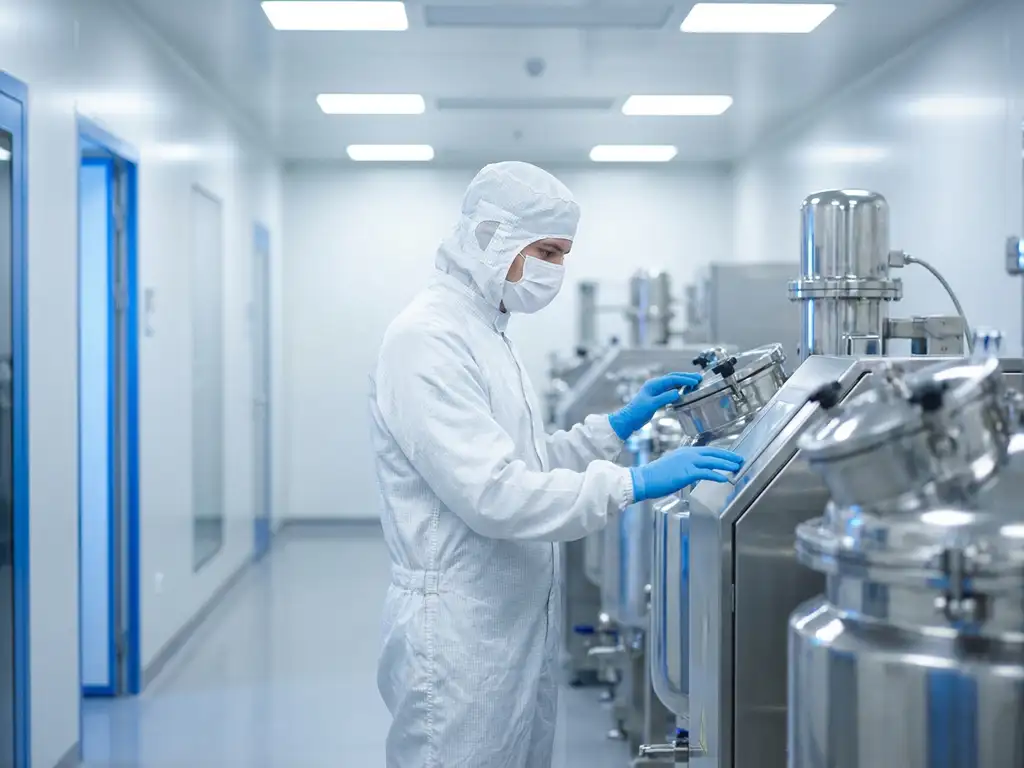
Environmental monitoring in pharmaceutical manufacturing is a systematic process for detecting, measuring, and controlling microbial and particulate contamination within production environments. It is a regulatory requirement under frameworks such as GMP, FDA 21 CFR Part 211, and EU Annex 1, making it a non-negotiable element of pharmaceutical quality systems. The sections below address the most common questions quality and facilities teams ask about building and maintaining an effective programme.
Why is environmental monitoring required in pharmaceutical manufacturing?
Environmental monitoring is required in pharmaceutical manufacturing because contamination in production environments poses a direct risk to product sterility, patient safety, and regulatory compliance. Regulatory bodies including the FDA, EMA, and WHO mandate documented monitoring programmes as a condition of manufacturing authorisation. Without them, manufacturers cannot demonstrate that their controlled environments are operating within validated limits.
The underlying concern is straightforward: pharmaceutical products, particularly sterile injectables, biologics, and implantable medical devices, are administered directly into the body. Any microbial or particulate contamination that enters the product during manufacture can cause patient harm, product recalls, or facility shutdowns. Environmental monitoring provides the documented evidence that contamination risks are being actively managed.
From a regulatory standpoint, GMP guidelines require manufacturers to establish alert and action limits for microbial and particulate levels in classified cleanrooms. Exceeding these limits triggers formal investigations and corrective actions. Monitoring data also supports batch release decisions, meaning that gaps in the programme can hold up production and affect supply continuity.
What does an environmental monitoring program include?
An environmental monitoring programme in pharma typically includes microbial air sampling, surface sampling, particle counting, personnel monitoring, and water testing, depending on the classification of the environment. Each component targets a different contamination vector, and together they provide a comprehensive picture of cleanroom performance over time.
The key components of a well-structured programme are:
- Viable air sampling: Active methods such as impaction samplers and passive settle plates detect airborne microbial contamination in classified zones.
- Non-viable particle counting: Optical particle counters measure airborne particulates by size and quantity, ensuring ISO or EU GMP grade limits are not exceeded.
- Surface monitoring: Contact plates and swabs assess microbial contamination on equipment surfaces, walls, floors, and work areas.
- Personnel monitoring: Glove prints and gown contact plates confirm that gowning procedures are effective and that personnel are not introducing contamination.
- Water system monitoring: Purified water and water for injection systems are tested for microbial counts and endotoxin levels.
- Temperature and humidity logging: Environmental parameters are tracked continuously because deviations can affect both product stability and microbial growth rates.
Each element of the programme must be tied to defined sampling locations, sampling frequencies, alert limits, and action limits. Documentation is central: regulators expect trend data, not just point-in-time results, so monitoring records must be retained and reviewed systematically.
What are the most common sources of contamination in pharma cleanrooms?
The most common sources of contamination in pharmaceutical cleanrooms are personnel, equipment, raw materials, air systems, and facility entry points. Of these, people are consistently identified as the primary contamination risk, generating particles and microorganisms through movement, skin shedding, and respiratory activity.
Industry experience consistently shows that around 80% of contaminants enter controlled environments at floor level, carried in on footwear, wheels, and equipment. This makes entry points one of the most critical and often underestimated contamination vectors in any cleanroom or controlled zone.
Other significant sources include:
- HVAC and air handling systems: Poorly maintained filters or pressure differentials can allow contaminated air to migrate between zones.
- Raw materials and packaging: Incoming goods can carry surface contamination if transfer procedures are inadequate.
- Equipment and utensils: Residues, biofilms, and particulates can accumulate on process equipment between cleaning cycles.
- Cleaning agents and procedures: Incorrect dilution, application, or rotation of disinfectants can leave surfaces inadequately decontaminated or introduce chemical residues.
- Facility infrastructure: Ageing surfaces, cracks, drains, and poorly sealed penetrations create harbouring points for microorganisms.
How often should environmental monitoring be conducted?
The frequency of environmental monitoring in pharmaceutical manufacturing depends on the cleanroom classification, the nature of the operations performed, and the regulatory framework that applies. Grade A and Grade B environments under EU GMP Annex 1 require continuous or near-continuous monitoring during operations, while Grade C and D areas are typically monitored at defined intervals during production.
Rather than applying a single universal schedule, monitoring frequency should be risk-based and validated. Factors that inform the right frequency include:
- The ISO or EU GMP classification of the zone
- Whether the area is used for aseptic processing or terminal sterilisation
- Historical trending data and how stable the environment has been
- The volume and frequency of personnel and equipment movement through the area
- Regulatory expectations specific to the product type and market
Monitoring should also be conducted after any significant event that could affect environmental conditions, such as maintenance work, equipment installation, a breach of gowning protocol, or a cleaning validation failure. The programme should be reviewed at least annually and updated whenever facility layout, processes, or personnel flows change.
What happens when environmental monitoring results are out of specification?
When environmental monitoring results exceed action limits, the manufacturer must initiate a formal out-of-specification (OOS) or out-of-trend (OOT) investigation. This is a regulatory requirement under GMP, and the investigation must be documented, root-cause driven, and resolved before affected batches can be released.
The investigation process typically follows this sequence:
- Immediate containment: Affected areas may be taken out of service or placed under increased monitoring while the investigation proceeds.
- Root cause analysis: Teams examine personnel activities, cleaning records, equipment status, HVAC performance, and entry point controls to identify the likely source.
- Impact assessment: Any batches manufactured during the period of exceedance are reviewed to determine whether product quality has been compromised.
- Corrective and preventive actions (CAPA): Once the root cause is identified, corrective measures are implemented and documented, with timelines and responsibilities assigned.
- Re-qualification: The affected area may need to undergo re-qualification testing before normal operations resume.
Repeated exceedances, even at alert level rather than action level, are a significant concern during regulatory inspections. Trend data showing a gradual deterioration in environmental performance is treated as seriously as a single dramatic exceedance, because it suggests that the contamination control system is not functioning as intended.
How does contamination control at entry points support environmental monitoring?
Contamination control at entry points directly reduces the particulate and microbial load entering a cleanroom, which in turn supports consistently lower environmental monitoring results. When entry point controls are effective, monitoring data trends remain stable and within limits, reducing the frequency of exceedances and the investigations that follow.
Entry point control is one of the most practical and immediate levers available to quality and facilities teams. Monitoring programmes can detect contamination, but they cannot prevent it. Physical barriers at the point of entry address the problem at its source rather than relying solely on detection after the fact.
Effective entry point contamination control typically includes:
- Gowning procedures and airlocks that create a physical transition between uncontrolled and controlled zones
- Contamination control mats positioned at personnel and wheeled traffic entry points to capture particulates before they enter the cleanroom
- Defined traffic flow routes that minimise the movement of uncontrolled items through classified areas
- Regular cleaning and maintenance of entry zones to prevent accumulation
The relationship between entry point control and monitoring outcomes is direct: facilities that invest in robust entry point solutions consistently find that their environmental monitoring data is easier to maintain within specification and simpler to defend during regulatory audits.
How Dycem contamination control mats support environmental monitoring programmes
Dycem’s reusable contamination control mats are designed to address one of the most persistent sources of cleanroom contamination: particulates and microorganisms carried in on footwear and wheeled equipment. By capturing up to 99.9% of shoe and wheel contaminants at the point of entry, Dycem mats reduce the particulate burden that environmental monitoring programmes are required to manage.
For quality and facilities managers responsible for maintaining GMP compliance and audit-ready monitoring data, Dycem offers a range of purpose-built solutions:
- Dycem CleanZone: A semi-permanent, washable mat for pedestrian and light-wheeled traffic at cleanroom entrances, gowning rooms, and critical corridors.
- Dycem WorkZone: Engineered for heavy-wheeled traffic including forklifts and pallet trucks, with a lifespan exceeding three years.
- Dycem Floating Mats: Repositionable mats for facilities requiring flexible contamination control across variable or temporary zones.
All Dycem mats are built with integrated Biomaster antimicrobial protection, are reusable rather than disposable, and are manufactured to ISO 9001 and 14001 standards. Unlike single-use sticky mats, Dycem’s solutions offer a more sustainable and cost-effective approach to entry point hygiene compliance over a 3 to 5 year product lifespan. To explore the full range of contamination control solutions or to arrange a free site survey, contact the Dycem team directly.