

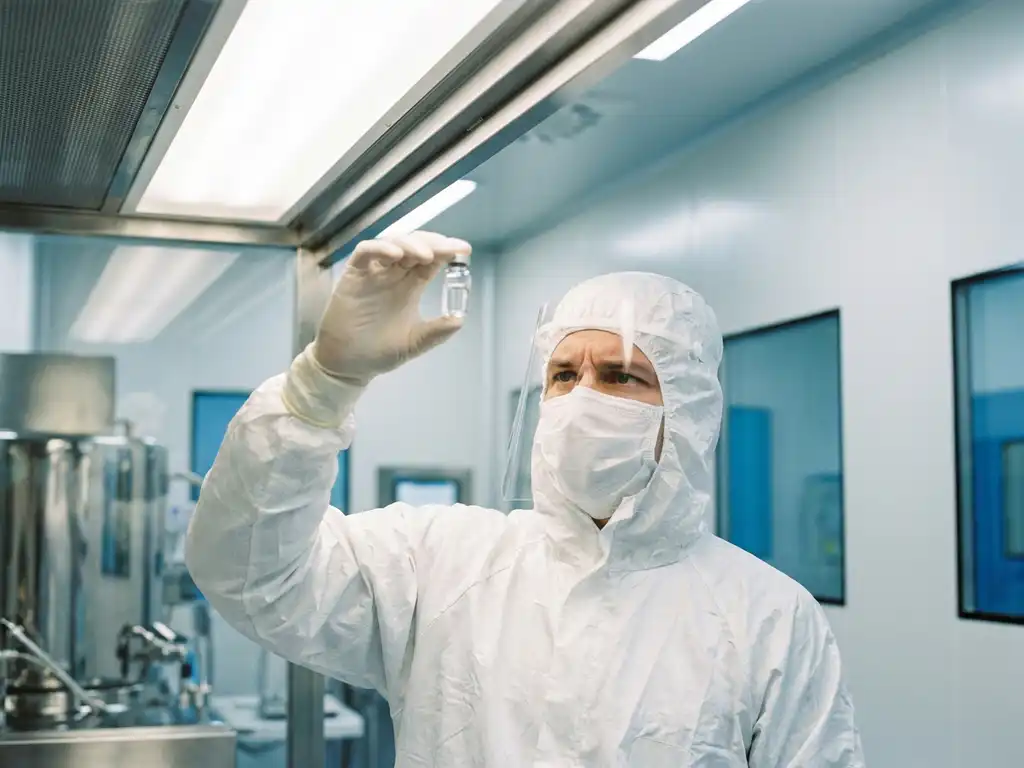
Particulate contamination directly threatens pharmaceutical product quality by introducing foreign matter into drug formulations, manufacturing environments, and packaging systems. These particles can compromise drug safety, trigger batch failures, and put patients at risk. For pharmaceutical manufacturers operating under GMP frameworks, controlling particulate matter is not a quality preference but a regulatory obligation. The sections below address the most critical questions surrounding particulate contamination in pharmaceutical manufacturing.
What types of particulates are most dangerous in pharmaceutical manufacturing?
The most dangerous particulates in pharmaceutical manufacturing are those that are invisible to the naked eye, chemically reactive, or biologically active. These include sub-visible particles (1 to 100 micrometres), microbial contaminants, fibres from gowning materials, metal fragments from equipment wear, and carbonaceous particles from HVAC systems. Their danger lies in the fact that they can enter a final drug product without triggering visible inspection failures.
Particulate matter in pharmaceuticals is broadly categorised as intrinsic or extrinsic. Intrinsic particles originate from the drug product itself or its container, such as protein aggregates in biologics or glass delamination from vials. Extrinsic particles enter from the external environment, including the cleanroom, personnel, equipment, and utilities. Extrinsic contamination is where facility design and contamination control practices have the greatest impact.
For injectable and parenteral drug products, even low concentrations of sub-visible particles carry serious patient safety implications. Fibres, rubber fragments, and silicone droplets are among the most frequently cited extrinsic particulate types in regulatory findings. Biological particles, including bacterial endotoxins and viable organisms, represent a separate but equally serious category with direct implications for sterility assurance.
How does particulate contamination enter a pharmaceutical cleanroom?
Particulate contamination enters pharmaceutical cleanrooms primarily through personnel movement, material transfer, and air infiltration. Research consistently identifies people as the largest source of particles in controlled environments, with each person shedding millions of skin cells and fibres per hour. Secondary entry routes include raw materials, equipment, packaging components, and breaches in gowning or airlock procedures.
Floor-level contamination is a particularly underestimated vector. Industry data indicates that up to 80% of contaminants entering controlled environments are tracked in at floor level via footwear and wheeled equipment. Every time a trolley, pallet truck, or operator’s shoe crosses from an uncontrolled corridor into a cleanroom entry point, it carries a particle burden that, without effective mitigation, is distributed across the controlled zone.
Air handling systems, if not properly validated and maintained, can also introduce or recirculate particles. HEPA filtration manages airborne particulates effectively within the room itself, but it cannot address what is introduced at entry points before air circulation captures it. This is why entry-point contamination control, including gowning protocols and floor-level capture systems, forms an essential first line of defence alongside HVAC management.
What are the regulatory consequences of particulate contamination in pharma?
Regulatory consequences of particulate contamination in pharmaceutical manufacturing range from warning letters and batch rejections to facility shutdowns and product recalls. Regulatory bodies including the FDA, EMA, and MHRA treat particulate control as a core GMP requirement, and failure to demonstrate adequate contamination management can result in enforcement action that halts production and damages commercial relationships.
Under FDA 21 CFR Part 211 and EU GMP Annex 1 (revised in 2022), manufacturers must demonstrate that their cleanroom environments, processes, and controls are validated to prevent particulate contamination. Annex 1 in particular introduced more stringent requirements around contamination control strategies, requiring manufacturers to document a holistic, risk-based approach to managing particulate and microbial contamination across the entire facility lifecycle.
The commercial consequences extend beyond regulatory penalties. A single contamination-related batch rejection can represent significant financial loss in both materials and production time. Repeated findings during regulatory inspections can trigger increased inspection frequency, import alerts for products entering regulated markets, and reputational damage that affects supply agreements and customer confidence. GMP compliance in this area is therefore as much a commercial priority as it is a quality obligation.
How does particulate matter affect drug safety and efficacy?
Particulate matter affects drug safety by introducing foreign bodies into formulations that can cause adverse patient reactions, including inflammation, embolism, and immune responses, particularly in injectable products. In terms of efficacy, particles can interact with active pharmaceutical ingredients, alter drug stability, or compromise the integrity of sterile packaging, reducing the therapeutic reliability of the product.
For parenteral and ophthalmic products, the risk is most acute. Visible particles in injectable solutions are a direct patient safety hazard, while sub-visible particles, which fall below the threshold of visual inspection, pose longer-term immunogenicity risks, particularly in biologic and protein-based therapies. The body’s immune response to foreign particulate matter can neutralise the therapeutic protein, reducing efficacy or triggering serious adverse events.
Solid oral dosage forms are generally less susceptible to particulate contamination affecting patient safety directly, but cross-contamination between product lines remains a concern. Metal fragments or chemical residues from shared equipment can alter dosage uniformity or introduce unintended substances into the formulation. For this reason, particulate control in oral solid manufacturing is still a regulatory requirement, even if the clinical stakes differ from those in sterile manufacturing.
What contamination control measures reduce particulate risk most effectively?
The most effective contamination control measures combine environmental design, personnel discipline, and validated physical barriers to address particulate risk at every entry point and process stage. No single measure is sufficient on its own. A layered, risk-based approach that addresses air quality, personnel behaviour, material flow, and floor-level ingress consistently outperforms single-point interventions.
Key measures that reduce particulate risk in pharmaceutical facilities include:
- HEPA filtration and classified air handling: Maintains particle counts within ISO-classified limits throughout the cleanroom environment.
- Gowning protocols and airlocks: Minimises the particle burden introduced by personnel at every entry point.
- Floor-level contamination control: Captures particles tracked in by footwear and wheeled equipment before they enter the controlled zone.
- Equipment qualification and maintenance: Prevents particle generation from worn or poorly maintained machinery.
- Material transfer procedures: Controls the particulate burden of raw materials and packaging entering the cleanroom.
- Environmental monitoring programmes: Provides ongoing data to detect deviations before they result in batch failures.
Floor-level control is frequently underinvested relative to its impact. Reusable contamination control mats positioned at cleanroom entry points, gowning rooms, and airlocks provide a validated, consistent mechanism for capturing shoe- and wheel-borne particles before they enter critical zones. Unlike disposable sticky mats, which lose effectiveness rapidly and generate significant single-use waste, reusable polymer mat systems deliver sustained performance across a defined lifespan.
How should pharmaceutical facilities validate their particulate control programmes?
Pharmaceutical facilities should validate their particulate control programmes through a structured process that includes risk assessment, environmental monitoring, performance qualification, and ongoing review. Validation must demonstrate that the combination of controls in place consistently maintains particle counts within the limits required for each cleanroom classification under ISO 14644 and relevant GMP guidance.
Validation begins with a contamination control strategy (CCS), which is now a formal requirement under EU GMP Annex 1. The CCS documents all sources of particulate and microbial contamination, the controls applied to each, and the rationale for why those controls are sufficient. It must be a living document, reviewed and updated in response to process changes, environmental monitoring trends, or regulatory updates.
Environmental monitoring forms the evidential backbone of any validated programme. Particle counting at defined locations and frequencies, combined with viable monitoring for microbial contamination, generates the data needed to demonstrate ongoing control. Trend analysis is as important as individual data points, since gradual deterioration in environmental performance often precedes a critical deviation.
Physical contamination control measures, including floor-level systems, must also be included in the validation scope. This means documenting performance specifications, cleaning and maintenance procedures, and replacement criteria so that the control remains effective throughout its operational life. Facilities that treat floor-level contamination control as an unvalidated housekeeping measure rather than a qualified system leave themselves exposed during regulatory inspections.
How Dycem CleanZone helps reduce particulate contamination in pharmaceutical facilities
Dycem’s contamination control mat systems are engineered specifically to address floor-level particulate ingress, one of the most consistent and underestimated sources of cleanroom contamination. For pharmaceutical manufacturers seeking to strengthen their contamination control strategy, Dycem CleanZone mats provide a validated, reusable solution at the critical entry points where particle ingress is highest.
Key benefits for pharmaceutical facilities include:
- Up to 99.9% capture of shoe and wheel contaminants at cleanroom entrances, gowning rooms, and airlocks
- Built-in Biomaster antimicrobial protection that inhibits microbial growth on the mat surface between cleaning cycles
- Reusable polymer construction with a 3 to 5 year operational lifespan, reducing waste and total cost of ownership compared to disposable sticky mat alternatives
- ISO-certified manufacturing aligned with EN ISO 9001 and 14001, supporting audit-ready documentation
- Customisable size, format, and colour to suit any facility layout or cleanroom classification requirement
Dycem’s WorkZone mats extend the same protection to heavy-wheeled traffic areas, while Floating Mats offer repositionable coverage for variable or temporary controlled zones. All Dycem contamination control products are designed to integrate into a validated contamination control strategy, with documentation support available to assist with regulatory compliance requirements. To discuss your facility’s specific needs, contact a Dycem specialist for a free site survey and consultation.