

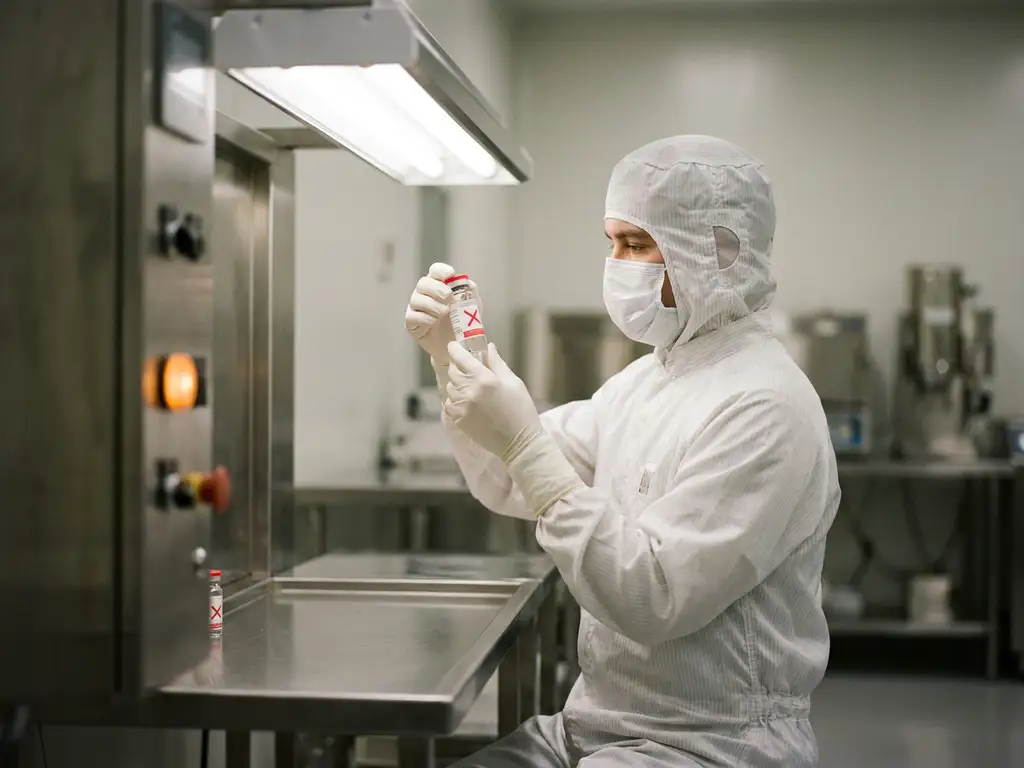
A contamination control strategy failure can result in product recalls, regulatory shutdowns, financial penalties, and serious harm to patients or consumers. The consequences extend far beyond a single contaminated batch — they threaten a facility’s operating licence, brand reputation, and long-term commercial viability. This article unpacks the specific risks, costs, and root causes behind contamination control failures, and what facilities can do to prevent them.
What happens when contamination enters a controlled environment?
When contamination enters a controlled environment, it compromises the integrity of the products, processes, or materials inside it. Particulate matter, microorganisms, or chemical residues can render entire production batches unusable, trigger equipment failures, or introduce health risks that propagate through a supply chain before they are detected.
In cleanrooms and controlled zones, even a small increase in particulate or microbial load can breach ISO classification thresholds. Once that threshold is crossed, a facility is no longer operating within validated parameters — meaning any product manufactured during that period is potentially non-conforming. Depending on the industry, this can mean a contaminated drug product, a defective semiconductor wafer, or a compromised sterile medical device.
What makes contamination in controlled environments particularly dangerous is the lag between entry and detection. Contamination often travels silently through a facility on footwear, wheels, or personnel garments before it is identified through environmental monitoring. By the time a positive result appears, the exposure window may already span hours or days of production.
What are the regulatory consequences of a contamination control failure?
The regulatory consequences of a contamination control failure can include warning letters, production shutdowns, import bans, product recalls, and in serious cases, criminal liability. Regulatory bodies such as the FDA, EMA, and MHRA treat contamination control failures as evidence of systemic quality management breakdowns, not isolated incidents.
Under GMP regulations, manufacturers are required to demonstrate that their contamination control strategy is validated, documented, and consistently applied. A failure in any part of that strategy — whether at the facility entry point, within gowning procedures, or in environmental monitoring — can constitute a critical GMP deviation. The consequences typically escalate as follows:
- FDA Form 483 observations or Warning Letters issued following inspections where contamination control gaps are identified
- Voluntary or mandatory product recalls when contaminated product has already reached the market
- Consent decrees or import alerts that restrict a facility’s ability to manufacture or distribute products
- Loss of manufacturing authorisation in the most severe cases of repeated or wilful non-compliance
For ISO-certified facilities, a contamination control failure can also trigger a non-conformance finding during third-party audits, jeopardising certification status and the supplier relationships that depend on it. GMP contamination consequences are rarely limited to a single regulatory interaction — they generate a cascade of corrective action requirements, re-validation exercises, and heightened regulatory scrutiny that can persist for years.
How much does a contamination event cost a business?
The cost of a contamination event in a controlled environment can range from tens of thousands to hundreds of millions, depending on the scale of the failure, the industry, and the regulatory response it triggers. Direct costs include product destruction, facility decontamination, and batch retesting, while indirect costs — lost production time, regulatory remediation, and reputational damage — are often far greater.
Breaking down the financial impact helps illustrate why prevention is always the more cost-effective position:
- Batch rejection and disposal: In pharmaceutical manufacturing, a single lost batch can represent millions in raw materials, processing time, and opportunity cost
- Facility shutdown and decontamination: Halting production for deep cleaning and re-validation removes revenue-generating capacity for days or weeks
- Regulatory remediation: Responding to a Warning Letter or audit finding requires significant internal resources and often external consultancy support
- Product recall logistics: Retrieving, testing, and disposing of distributed product carries direct costs and supply chain disruption
- Reputational damage: Customer and partner confidence, once lost, takes considerable time and investment to rebuild
When the cleanroom contamination cost is weighed against the investment required to implement a robust contamination control strategy, the business case for prevention is clear. The recurring expense of disposable sticky mats, for example, often exceeds the lifetime cost of a reusable mat system — while delivering inferior, inconsistent performance.
Which industries face the highest risk from contamination control failures?
Pharmaceuticals, medical devices, food and beverage, aerospace, and electronics manufacturing face the highest risk from contamination control failures. These industries share a common characteristic: the consequences of contamination extend beyond the facility itself, directly affecting product safety, patient outcomes, or the structural integrity of critical components.
Pharmaceuticals and medical devices
In pharmaceutical and medical device manufacturing, contamination control is a regulatory requirement under GMP, FDA 21 CFR, and EU Annex 1. A contamination event can result in compromised sterile products reaching patients, triggering recalls, patient harm, and significant regulatory enforcement action. The stakes are uniquely high because the end user is often a vulnerable individual whose health depends on product integrity.
Food and beverage, aerospace, and electronics
In food and beverage production, microbial contamination can cause widespread illness and prompt large-scale recalls with immediate public health implications. In aerospace and defence, particulate contamination on precision components can contribute to mechanical failure — with consequences that go well beyond financial loss. In electronics and semiconductor manufacturing, even sub-micron particles can render components defective, making cleanroom contamination risks central to yield rates and product reliability.
Why do contamination control strategies fail in the first place?
Contamination control strategies most commonly fail because of gaps in entry point management, inconsistent human behaviour, over-reliance on a single control measure, or the gradual degradation of equipment that is not maintained or replaced. No single factor typically causes a failure — it is usually a combination of weaknesses that accumulate over time.
The most frequently observed root causes include:
- Inadequate entry point controls: Floor-level contamination accounts for the majority of particulates entering controlled environments, yet entry point solutions are often under-specified or improperly maintained
- Human compliance variability: Gowning protocols and procedural controls depend on consistent human behaviour — an inherently unreliable variable without robust engineering controls to support them
- Degraded or ineffective equipment: Disposable sticky mats lose effectiveness rapidly with use and are frequently changed too late; footbaths can become contamination sources themselves if not managed correctly
- Siloed contamination control thinking: Treating contamination control as a single-point intervention rather than a layered, facility-wide strategy leaves significant gaps
- Insufficient environmental monitoring: Without regular, structured monitoring data, contamination trends go undetected until they become critical failures
A contamination control strategy failure is rarely sudden. It is typically the result of a system that has been eroding quietly — through deferred maintenance, budget pressure on consumables, or a gradual drift in procedural compliance that goes unchallenged until an audit or incident forces a reckoning.
How can facilities prevent contamination control strategy failures?
Facilities can prevent contamination control strategy failures by implementing a layered, validated approach that addresses entry points, personnel behaviour, equipment performance, and ongoing monitoring together. No single measure is sufficient on its own — effective contamination control requires multiple reinforcing controls working in concert.
A robust contamination control strategy typically includes:
- High-performance floor-level contamination control at all critical entry points, including cleanroom entrances, gowning areas, airlocks, and heavy-traffic corridors
- Validated, documented procedures for gowning, decontamination, and equipment movement that are regularly audited for compliance
- Structured environmental monitoring programmes that generate trend data, enabling early detection of contamination pressure before it becomes a critical event
- Regular review and maintenance of all control equipment, with clear replacement or servicing schedules based on performance data rather than convenience
- Staff training and awareness programmes that reinforce why contamination control matters, not just how to follow a procedure
Facilities that treat contamination control as a strategic, continuously managed system — rather than a checklist item — are significantly better positioned to maintain compliance, pass audits, and protect their products and people.
How Dycem helps facilities avoid contamination control strategy failure
Dycem’s reusable contamination control mat systems are engineered specifically to address the entry point vulnerabilities that sit at the root of most contamination control failures. By capturing up to 99.9% of shoe and wheel contaminants at critical transition zones, Dycem mats provide a validated, consistent, and low-maintenance layer of protection that disposable alternatives cannot match.
Dycem’s contamination control products are purpose-built for the demands of regulated and precision-sensitive environments:
- Dycem CleanZone delivers high-performance particulate capture at cleanroom entrances, gowning rooms, and airlocks — the highest-risk pedestrian entry points in any controlled facility
- Dycem WorkZone handles heavy-wheeled traffic including forklifts and pallet trucks, closing the contamination gap in demanding industrial and logistics zones
- Dycem Floating Mats provide repositionable contamination control for variable or temporary zones, offering flexibility without compromising performance
- Built-in Biomaster antimicrobial protection across all mat formats supports microbial contamination control alongside particulate capture
- A 3 to 5 year product lifespan reduces the operational burden of frequent replacement and delivers a significantly lower total cost of ownership than disposable sticky mat programmes
Dycem’s contamination control specialists are available worldwide to assess your facility’s specific risk profile and recommend the right solution for each entry point and traffic zone. Contact the Dycem team to arrange a free site survey and take the first step toward a more resilient contamination control strategy.